AWS Weekly Roundup Highlights Startup Innovation, Continuous Service Evolution, and Critical Lifecycle Management for Cloud Users


Amazon Web Services (AWS) continues to demonstrate its foundational role in fostering technological advancement and supporting the global digital economy, as evidenced by its latest weekly roundup. This recurring publication serves as a vital touchpoint for the AWS community, offering insights into strategic priorities, significant service updates, and essential operational information. A prominent theme from the recent dispatch underscores AWS’s invigorated focus on the startup ecosystem, exemplified by the impactful work of healthtech innovators, alongside the ongoing cadence of platform enhancements and crucial service availability updates. These elements collectively paint a picture of a dynamic cloud environment committed to both nurturing groundbreaking ideas and ensuring operational stability for its vast customer base.
Empowering Global Startups: The Transformative Power of Cloud for Innovation
A recent interaction with the AWS Startups team provided a fresh perspective on the profound impact of cloud technology, particularly through the lens of entrepreneurial ventures. The enthusiasm derived from engaging with founders who are actively tackling pressing global challenges is palpable. Among the compelling narratives shared, the story of EyeCare Health, a Brazilian healthtech startup founded by Marco Negreiros, stands out as a testament to how innovative application of cloud services can bridge critical societal gaps.
Negreiros highlighted a stark reality in Brazil: over 70% of the country’s municipalities lack a single ophthalmologist. This statistic translates into a massive underserved population struggling with basic eye care access, leading to preventable vision impairment and broader public health concerns. EyeCare Health’s revolutionary response leverages the ubiquity of the smartphone – a device carried by nearly everyone – to deliver fundamental vision tests. By transforming a personal device into a diagnostic tool, EyeCare Health bypasses geographical barriers and the need for immediate proximity to a specialized clinic, democratizing access to early detection and preventative care. This innovative approach, moving from a significant societal deficiency to a concrete, scalable solution, epitomizes the transformative potential that AWS seeks to foster within the startup community.
AWS’s Strategic Commitment to the Startup Ecosystem
AWS’s commitment to startups extends beyond mere anecdotal appreciation; it is a strategic pillar of its broader mission. The platform actively nurtures emerging businesses by providing the scalable, flexible, and cost-effective infrastructure necessary for rapid iteration and growth. Startups, by their very nature, are laboratories of innovation, often pushing the boundaries of existing technologies and creating entirely new market segments. AWS recognizes that by empowering these agile entities, it not only contributes to global economic development but also drives the evolution of its own services, as startups frequently adopt and stress-test new features, providing invaluable feedback.
Programs such as AWS Activate offer credits, training, and technical support specifically tailored to the unique needs of early-stage companies. This support infrastructure is critical for startups in sectors like healthtech, which often face stringent regulatory requirements, data security challenges, and the need for robust, low-latency performance. For EyeCare Health, leveraging AWS’s secure, compliant, and globally distributed cloud infrastructure likely enabled them to rapidly develop and deploy their application, scale to meet demand across diverse regions of Brazil, and integrate advanced capabilities like machine learning for more accurate diagnostic assistance, all while maintaining data privacy and regulatory adherence.
The global healthtech market, projected to grow significantly in the coming years, particularly in emerging economies, relies heavily on cloud computing for its agility and reach. Brazil, with its vast geography and varied healthcare infrastructure, presents both immense challenges and opportunities for digital health solutions. Startups like EyeCare Health, powered by cloud platforms, are at the forefront of this transformation, proving that technological innovation can directly address long-standing inequalities in healthcare access.
The Rhythm of Innovation: Continuous Service Launches and Updates
AWS is renowned for its relentless pace of innovation, consistently introducing new services, features, and enhancements across its vast portfolio. While the recent roundup did not enumerate specific launches in detail, these weekly summaries are a critical mechanism for informing customers about the continuous evolution of the AWS cloud platform. The absence of specific listings in the provided text serves as a prompt to reflect on the nature of this constant development cycle and its implications for cloud users.
The core of AWS’s strategy involves a deep understanding of customer needs, translating into a steady stream of new capabilities that empower developers and businesses to build more efficiently, scale more effectively, and innovate more rapidly. Typically, AWS launches fall into several key categories, each designed to address specific aspects of modern cloud computing:
- Artificial Intelligence and Machine Learning (AI/ML): AWS regularly introduces new AI services, pre-trained models, and developer tools (e.g., for natural language processing, computer vision, forecasting) that democratize access to advanced AI capabilities. These innovations allow companies to integrate intelligent features into their applications without extensive in-house ML expertise.
- Compute Services: Enhancements in computing power, new instance types optimized for specific workloads (e.g., memory-intensive, GPU-accelerated), and advancements in serverless computing (AWS Lambda, AWS Fargate) provide greater flexibility and cost efficiency for running applications.
- Databases and Analytics: New database offerings (relational, NoSQL, graph, in-memory) and sophisticated analytics tools (for data warehousing, real-time analytics, business intelligence) enable organizations to manage and derive insights from ever-growing data volumes.
- Networking and Content Delivery: Improvements in global network infrastructure, edge computing services, and content delivery networks ensure faster, more reliable access to applications and data for users worldwide.
- Security, Identity, and Compliance: With cyber threats constantly evolving, AWS frequently releases new security services, identity management tools, and compliance features to help customers protect their data and meet regulatory requirements.
- Developer Tools and Management: Updates to continuous integration/continuous delivery (CI/CD) pipelines, monitoring and logging services, and management tools streamline the development and operational processes for cloud applications.
This continuous stream of updates ensures that AWS customers, from the smallest startup to the largest enterprise, always have access to cutting-edge technologies. The strategic implication is significant: businesses can adopt new functionalities as they emerge, iterate on their products faster, and maintain a competitive edge without the burden of managing underlying infrastructure or investing heavily in proprietary research and development. An AWS spokesperson often reiterates that "Our relentless pace of innovation ensures that our customers always have access to the latest and most powerful tools to build and scale their applications securely and efficiently." These weekly roundups, therefore, are not just announcements; they are essential guides for navigating and capitalizing on the ever-expanding capabilities of the AWS cloud.
Navigating the Cloud Lifecycle: AWS Service Availability Updates
Beyond the excitement of new launches, a critical aspect of managing a mature cloud platform like AWS involves the systematic lifecycle management of its services. This process ensures that the platform remains robust, secure, and optimized for current technological standards and customer needs. The recent AWS Weekly Roundup provided crucial updates regarding service availability, detailing services transitioning to Maintenance, Sunset, or End of Support phases. While specific service names were not listed in the provided content, understanding the implications of these lifecycle changes is paramount for all AWS users.
AWS is transparent about its service lifecycle, providing customers with guidance through its "AWS Product Lifecycle Changes" documentation. This proactive communication is vital for minimizing disruptions to operations and facilitating smooth migrations to newer, more efficient alternatives. The reasons behind these transitions are multifaceted, often driven by technological advancements, evolving security standards, consolidation of features, or a shift in market demand towards newer offerings.
Understanding Lifecycle Stages and Their Implications:
- Services Moving to Maintenance (no longer accessible to new customers starting July 30, 2026):
When a service enters the Maintenance phase, it signifies that while existing customers can continue to use it, new customers will no longer be able to provision it. This often occurs when AWS has introduced a newer, more advanced, or more efficient alternative. For existing users, this phase serves as an early signal to begin planning for a future migration. Although the service remains operational and supported, AWS encourages users to explore and transition to the recommended replacements to leverage the latest features, security enhancements, and performance improvements. The July 30, 2026, deadline indicates a clear cutoff for onboarding new users, emphasizing a strategic shift in AWS’s offerings. - Services Entering Sunset:
The Sunset phase indicates a clear path towards the eventual deprecation of a service. This stage typically comes with a defined timeline, during which AWS provides detailed migration paths and support to help customers transition their workloads to alternative services. The implications for customers are direct: proactive migration planning is essential to avoid potential operational disruptions. Reasons for a service entering Sunset can include the obsolescence of underlying technology, a lack of widespread adoption, or the integration of its functionalities into a broader, more comprehensive service. For example, older versions of a particular service might enter Sunset as newer, enhanced versions become the standard. - Services Reaching End of Support (as of June 30, 2026):
This is the most critical lifecycle stage. Services reaching End of Support are no longer maintained, patched, or officially supported by AWS. Continuing to use such services beyond the specified date (June 30, 2026, in this case) carries significant risks, including potential security vulnerabilities, performance degradation, and incompatibility with newer AWS services. For customers, failing to migrate by this deadline can lead to compliance issues, increased operational risks, and a lack of access to AWS Support for issues related to the deprecated service. This emphasizes the critical importance of adhering to AWS’s lifecycle guidance and incorporating these updates into an organization’s cloud governance and change management strategies.
AWS’s official stance reiterates, "We understand that changes in availability can impact your operations. For specific guidance, consult the relevant service documentation or contact AWS Support." This statement underscores AWS’s commitment to supporting its customers through these transitions. Resources such as comprehensive documentation, migration guides, dedicated AWS Support teams, and a network of AWS Partners are available to assist organizations in planning and executing smooth migrations. The broader implication for the cloud industry is the necessity for robust cloud governance, where monitoring service lifecycle updates and proactively planning for necessary transitions become integral parts of maintaining a secure, efficient, and future-proof cloud environment.
Connecting the Community: Upcoming AWS Events and the Builder Center
Beyond the technical updates and strategic shifts, AWS also maintains a vibrant global community through various engagement platforms. The roundup highlighted upcoming AWS events and the AWS Builder Center, both crucial for fostering learning, collaboration, and continuous skill development among cloud professionals.

The Value of AWS Events
AWS hosts a plethora of events, ranging from large-scale global conferences like re:Invent to specialized workshops, webinars, and local meetups, available both virtually and in-person. These events serve multiple critical functions:
- Knowledge Transfer: They are primary venues for announcing new services, showcasing best practices, and deep-diving into technical topics through sessions led by AWS experts and community leaders.
- Skill Development: Hands-on labs, workshops, and certification opportunities at these events help developers and IT professionals hone their skills and stay current with the rapidly evolving cloud landscape.
- Networking: Events provide invaluable opportunities for attendees to connect with peers, industry experts, and AWS personnel, fostering a sense of community and facilitating the exchange of ideas and solutions.
- Inspiration: Hearing about real-world case studies and innovative applications of AWS services can inspire attendees to push the boundaries of what’s possible with cloud technology.
The AWS Builder Center: A Hub for Continuous Learning and Collaboration
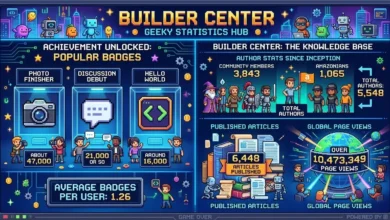
The AWS Builder Center is positioned as a centralized online platform designed to "connect with builders, share solutions, and access content that supports your development." It acts as a digital nexus for the AWS community, offering a rich repository of resources that complement the more structured event formats.
- Resource Repository: The Builder Center typically houses technical articles, tutorials, code samples, and reference architectures, providing practical guidance for developers tackling various cloud challenges.
- Community Engagement: It facilitates peer-to-peer interaction, allowing builders to share their experiences, ask questions, and contribute their own solutions, thereby enriching the collective knowledge base.
- Personalized Learning Paths: Users can often find curated content tailored to their specific interests or skill levels, enabling a more targeted and efficient learning journey.
Both upcoming events and the AWS Builder Center are indispensable tools for anyone leveraging AWS. In an environment characterized by rapid innovation and constant change, continuous learning and community engagement are not merely beneficial but essential for maximizing the value of cloud investments and staying ahead in the technological curve. Developers often highlight the value of these platforms for hands-on learning and peer-to-peer insights, which are crucial for navigating the rapid pace of cloud innovation.
This weekly roundup, penned by Daniel Abib, encapsulates the dynamic essence of AWS: a platform that not only provides the foundational infrastructure for the digital age but also actively champions the innovators building its future, while meticulously managing the evolution of its own offerings to ensure a reliable and cutting-edge experience for all users. The consistent rhythm of these updates underscores AWS’s dedication to its community and its pivotal role in shaping the technological landscape.